|
|
|
|
 |
 |
Jeff Bales
|
 |
|
|
(520) 303-6789
|
|
|
|
|
 |
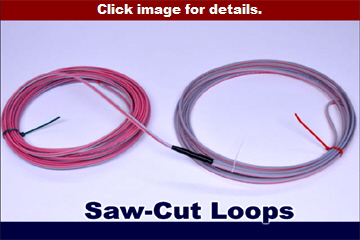
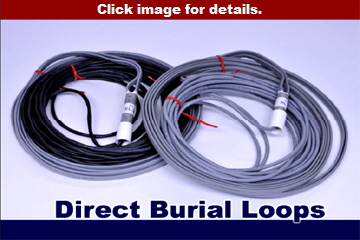
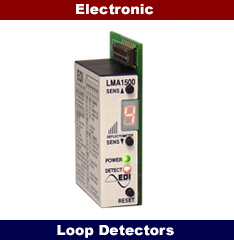
Detector Loops (inductive loop detectors) Factory Authorized Distributor / Dealer. BD Loops are for parking lots, intersections, drive through restaurants, gates, barrier gate operators, bicycles and pedestrian control products. Competitive pricing on pre-formed detector loops, saw cut detector loops, direct burial detector loops, detector loop checker, TB kit (saw cut installation kit), pizza wheel, loop detector sealant, and loop detector sealant applicators. We are patriots that sell loop detectors, loop detector backer rods, and loop detector sealant (Bondo, RAI, Chemque) for DoorKing, Magnetic, Osco, and Linear barrier gate operators, vehicle counters, traffic lights, speed detection devices, and other traffic controls for vehicle sensing, at discount. Brands are: BEA, Diablo Controls, EDI, Elite, EMX, Northstar, Reno A&E, Sarasota, and US Traffic / PEEK. Used at HOA, shopping center, malls, airports, municipalities, military bases/installations, factories and businesses to protect parking lots, employee, security, and public access, private and commercial property. Protec your controls against RF. We ship BD pre formed detector loops world-wide.
|
|
|
 |
|
|
|
 |
DETECTOR LOOPS (pre-formed inductive loop detectors) for VEHICLE ACCESS CONTROLS & INTERSECTIONS
|
 |
 |
|
Parking and Traffic Control
|
 |
 |
|
CALL NOW TO ORDER: (520) 303-4444
|
 |
 |
|
CALL NOW TO ORDER: (520) 303-4444
|
 |
 |
 |
 |
 |
 |
 |
 |
 |
 |
 |
 |
 |
 |
 |
 |
|
‘Detector Loops’ are also known as inductive loop detectors, preformed loop detectors, pre formed loop detectors, pre-formed loop detectors, or loop detectors. We are a factory authorized distributor / dealer of BD Loops. BD Loops brand inductive detector loops are ideal for parking lots, intersections, drive through restaurants, gates, barrier gate operators, fencing, doors, bicycle lanes, intersections, stop and go lights, vehicle sensing, and pedestrian control products.
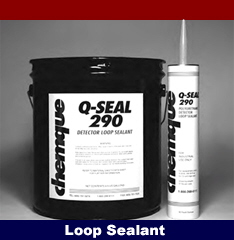
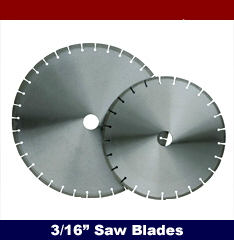
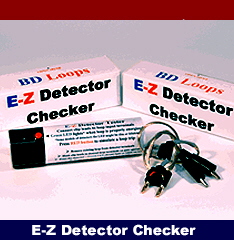
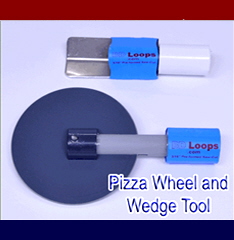
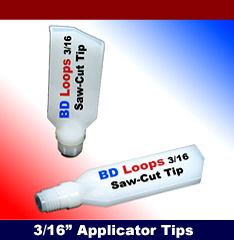
Competitive pricing on pre-formed detector loops, saw cut detector loops, direct burial detector loops, detector loop checkers, TB kits (saw cut installation kits), pizza wheel, loop detector sealant, and loop detector sealant applicators.
We are patriots that sell, at discount, loop detectors, loop detector backer rods, and loop detector sealant (Bondo, RAI, Chemque) for DoorKing, Magnetic, Osco, and Linear brands. Barrier gate operators, vehicle counters, traffic lights, speed detection devices, and other traffic controls for vehicle sensing typically use loops rather than motion or weight sensors.
Brands in the industry are: BEA, Diablo Controls, EDI, Elite, EMX, Northstar, Reno A&E, Sarasota, and US Traffic / PEEK. Used at HOA, shopping center, malls, airports, municipalities, military bases/installations, factories and businesses to protect parking lots, employee, security, and public access, private and commercial property, these types of products have been proven to be reliable, safe, and affordable. Protec your controls against RF by using shielding.
We ship BD pre-formed detector loops world-wide, and can combine them with other vehicle access control products that we sell.
|
|
|
Package deals are available.
|
|
|
|
Distributor for:
|
|
|
|
 |
|
|
 |
|
|
|
 |
|
|
|
|
|
|
|
|
|
 |
|
|
|
|
|
|
 |
|
|
|
|
|
|
|
|
|
|
 |
 |
|
DetectorLoops.com presents an incredible study about inductive loop detectors: (Link) A summary is below:
ABSTRACT
An algorithm for real time estimation of truck traffic in multi-lane freeway is proposed. The algorithm uses data from single loop detectors, the most widely installed surveillance technology for urban freeways in the US. The algorithm works for those freeway locations that have a truck-free lane, and exhibit high lane-to-lane speed correlation. These conditions are met by most urban freeway locations. The algorithm produces real time estimates of the truck traffic volumes at the location. It can also be used to produce alternative estimate of the mean effective vehicle length, which can improve speed estimates from single loop detector data. The algorithm is tested with real freeway data and produces estimates of truck traffic volumes with only 5.7% error. It also captures the daily patterns of truck traffic and mean effective vehicle length. Applied to loop data on I-710 near Long Beach during the dockworkers lockout October 1-9, 2002, the algorithm finds a 32 % reduction in 5-axle truck volume. Keywords: truck traffic; vehicle volume; vehicle classification; single loop detectors; lane-to-lane correlation
1. INTRODUCTION
Accurate knowledge of freight or heavy truck traffic is critical for various highway-related planning, design, and policy analyses. It is necessary to have estimates of such quantities as Truck Annual Average Daily Traffic (TAADT) for different sections of a freeway (1,2). Typically, such data are collected either by an Automatic Vehicle Classifier (AVC) or by manual counting. An AVC is usually based on technologies such as Weigh-In-Motion (WIM) consisting of inductive loops and a bending plate or Piezo sensors, or more sophisticated technologies such as video imaging, laser and night vision systems, or acoustic signal analysis. These systems produce online counts of traffic of different vehicle types. But they are costly to install and suffer various limitations; see (3) and references therein. When manual counting is used, a person records the truck traffic distribution for a short sampling period, usually a day or two, and the counts are extrapolated to get an estimate for a whole year. This estimate can have a large margin of error, even after adjusting for seasonal and day-of-week trends (1,4,5,6). Improving accuracy by increasing the frequency and length of manual counts is costly.
Double loop detectors can serve as a crude automatic vehicle classifier by using the vehicle lengths as a surrogate for vehicle type. It is reasonable in many cases to assume that vehicles longer than say 50 ft are heavy trucks. But deployment of double loop detectors is limited. Moreover, separate software or hardware needs to be installed to extract vehicle length information from double loops. In this paper, we propose an algorithm for the real-time estimation of truck traffic volume from single loop detectors. In contrast to other technologies, single loop detectors are much more widely deployed. In principle, they are unable to record vehicle lengths as double loop detectors can, and only report flow (traffic volume) and occupancy. The algorithm makes use of the essential relationship between speed, flow, occupancy, and effective vehicle length, according to which vehicle length can be estimated if average speed is known. It also relies on the phenomenon that the average speed of a truck-rich lane is actually quite close to that of truck-free inner lane(s), that is, there is a high lane-to-lane correlation of speed. Using these two characteristics of traffic flow, we estimate the proportion of trucks within a sample, given representative lengths of trucks and passenger vehicles. This idea is elaborated in section 2.
Section 2 also discusses the relevance of the algorithm for estimating the mean effective vehicle length (MEVL), whose inverse is called ‘G-factor’. The G-factor is a crucial parameter in velocity estimation using single loop flow and occupancy data. It is shown that the algorithm produces, as a byproduct, an online estimate of the G-factor or the daily profile of the G-factor. The G-factor estimates can improve speed estimates based on single-loop data. The algorithm is tested with two data sets and the results are presented in section 3. Those results show a 5.7% error in the estimates of truck volumes. In section 4, the algorithm is applied to data on I-710 near Long Beach, CA, during the dockworkers lockout October 1-9, 2002. It estimates a 32 % reduction in 5-axle truck volume during the lockout compared with the period before the lockout. Section 5 summarizes the results.
Data
For the analysis as well as for an explanation of concepts, we use data from Berkeley Highway Laboratory (BHL). See (7) for details about the data. We study eastbound traffic at Station 6, near the Ashby Avenue exit. The data are collected for ten Mondays between March 22, 1999 and May 24, 1999, at eight double loop detector stations located on I-80 in Berkeley, California.
The double loop speed measurements and the effective vehicle lengths of individual vehicles are available. Thus these measurements serve as ‘ground truth’. The algorithm of course only makes use of data from one of the double loops. Another test data set consists of WIM hourly vehicle classification data from eastbound I - 91 at post mile 7.5, east of Avalon Boulevard in Los Angeles, for a period of 11 days May 5-18, 2002, excluding May 12, 13 and 14. The 5-minute single loop measurements of flow and occupancy were collected from the freeway performance measurement (PeMS) database (8) at the loop station (VDS 718130) closest to the WIM station, for the same time period. We use the PeMS data to estimate the truck volumes and compare the estimates with the WIM data.
Finally, we use PeMS data from a location on I-710 near Long Beach, from August 16, 2002 to October 23, 2002, to estimate the impact on truck volumes during the dockworkers lockout, October 1-9, 2002.
2. METHODS
Conventional single loop detectors measure flow, the number of vehicles that pass the detector during a fixed sample period, and occupancy, the percentage of the given sample period that the detector is “occupied” by vehicles. [Math equations removed. Click here for the full study.] Observe that this value is large if there are many long vehicles (LVs) and small if the traffic consists mostly of passenger cars (PCs).
Distribution of Effective Vehicle Length
Figure 1 shows the distribution of the effective vehicle lengths (EVLs) observed for 25,700 vehicles detected during the 24-hour period of March 29, 1999 from BHL data. Only data from the loop detector installed in the fourth (or outermost) lane, which has significant truck traffic, is used for the plot. The highest peak is at 17 ft; there is another peak at 61 ft. It is likely that the former corresponds to the typical length of PC and the latter to that of LV. For our study, we will use nominal representative lengths 18.6 ft and 61.2 ft as the typical length of the two vehicle classes. These are the group means of those vehicles whose EVLs are smaller and larger than the threshold 40 ft, respectively. A bimodal distribution like in Figure 1 occurs when the vehicles mostly belong to two classes of vehicles with appreciably different lengths, which seems to be the case in these data. Many researchers, including in (9), have noticed this bimodal characteristic of EVL distribution in freight-rich traffic. [Math equations removed. Click here for the full study.]
Two Key Assumptions and the Algorithm
As we have just seen, knowledge of the mean velocity allows one to calculate the proportion of trucks and their volume during a time period. In general, the mean velocity is the important quantity that is unknown and must be estimated. In this regard, researchers have observed the following phenomenon: “For multi-lane freeways, vehicle speed over different lanes tend to be synchronized” or, v(i, j) ≈ v(i', j) . (12) We call this phenomenon a “strong lane-to-lane correlation of speed” in multi-lane freeways. Also, for most multi-lane freeways in the US, heavy trucks are not allowed or, discouraged from, driving in inner lanes. This leads to the hypothesis p(i, j) ≈ 0 or c L(i, j) ≈ l , (13) in which “i” corresponds to inner or faster lanes, say the first or second lane from the median. Suppose lane i is almost truck-free and i' is truck-rich, and the two lanes have high laneto- lane speed correlation. [Math equations removed. Click here for the full study. A large portion of this study is removed to abbreviate this article. Click the link for the full, thorough report.]
6. CONCLUSION
We proposed an online algorithm for estimating truck traffic volume. The algorithm is applicable to multi-lane freeways with one truck-free lane and high lane-to-lane speed correlation. Both conditions seem to be satisfied at most major urban freeway locations not close to on and off ramps. This makes the algorithm widely applicable. The algorithm is extremely easy to implement, requiring tuning of only a few generic parameters. It can be also used for G-factor calculation. In the empirical study at two urban freeway locations with moderate long truck traffic volume, the algorithm captures the qualitative characteristics of daily truck traffic satisfactorily with acceptable bias. Quantitatively, it exhibits a 5.7% error in total truck volume estimates for data from BHL study. The algorithm also captures very well the historical daily trend of G-factor, proving beneficial for improving speed estimation from single loop detector data. These facts and the wide availability of single loop detector infrastructure imply that online estimates of total truck volume as well as seasonal and daily truck patterns will become available for many freeway locations, once the algorithm is implemented. The availability of such information can improve freeway design and management.
7. ACKNOWLEDGEMENT
The authors thank Ben Coifman, Ohio State University, for the BHL data and helpful discussions, and Joe Avis of California Department of Transportation for the AVC data from LA County and other helpful material. This study is part of the PeMS project, which is supported by grants from Caltrans to the California PATH Program. We are very grateful to engineers from Caltrans Districts 3, 4, 7, 8 and 12 and Headquarters for their encouragement, understanding, and patience. They continue to shape the evolution of the PeMS vision, to monitor its progress, to champion PeMS within Caltrans. Without their generous support this project would not have reached such a mature stage. The contents of this paper reflect the views of the authors who are responsible for the facts and the accuracy of the data presented herein. The contents do not necessarily reflect the official views of or policy of the California Department of Transportation. This paper does not constitute a standard, specification or regulation.
DetectorLoops.com thanks the authors of this study for not copyright protecting this important study. Much can be learned by installers and engineers by reading and studying the complete study as linked.
|
 |
 |
|
PLEASE READ MORE ABOUT PRE FORMED (PREFORMED) INDUCTIVE DETECTOR LOOPS for parking and traffic control:
For those seeking to learn more about pre formed inductive detector loops and other vehicle access controls, further information can be read below and much more is available on the internet. Please feel free to contact us to learn more about inductive detector loops, turnstiles, barrier gate operators, traffic spike systems and access controls.
An access control, which can be a set of turnstiles, admissions turnstiles, revenue turnstiles, barrier, gate, operators, revolving turnstiles, swing turnstiles, optical turnstiles, controlled turnstiles, waist high turnstiles, full height turnstiles, mechanical turnstiles, guardian traffic systems, one way traffic spikes, road blockers, Antech, tire spikes, admission ticket, scanning, traffic spikes, a door, turnstile, parking gate, elevator, or other physical barrier where granting access can be electrically or automatically controlled using pre formed inductive detector loops. Typically the access point is a door or traffic access mechanism like a barrier gate. An electronic access control can contain several components. At its most basic there is an electric lock. The lock is unlocked by an operator with a switch. To automate this, operator intervention is replaced by a reader. The reader could be a keypad where a code is entered, it could be a card reader, or it could be a biometrics reader. Readers do not usually make a decision but send a card number to an access control station that verifies the number against a pre-approved access list. To monitor the door position a magnetic door switch can be used. A door switch is not unlike those on freezers or car doors. Generally, only entry is controlled and exit is uncontrolled. In cases where exit is also controlled a second reader is used on the opposite side of the door or traffic control mechanism. Traffic control mechanisms can be one-way or motorized, using inductive detector loops to make sure that the system does not close upon vehicles or pedestrians. In cases where exit is not controlled (free exit) a device called a request-to-exit (REX) is used. Request-to-exit controls can be a pushbutton or a motion detector. When the button is pushed or the motion detector detects motion at the door, the door alarm is temporarily ignored while the door is utilized. Exiting a door without having to electrically unlock the door is called mechanical “free egress”. This is a safety feature. In cases where the lock must be electrically unlocked on exit, the request-to-exit device also unlocks the door.
Magnetic Autocontrol manufactures an excellent array of barrier gate operators (up and down arms), pedestrian traffic controls, turnstiles, full height turnstiles, waist high turnstiles, pedestrian barriers, transit pedestrian control systems, MPT dual full height turnstiles, full height swing gates, waist high tripod turnstiles, We sell BDLoops.com brand inductive detector loops to complement their function and make them safer. Catrax Master, Catrax Clip, MPP motorized waist high turnstiles, MPR bi-parting retractable panel barriers, MPH high door retractable panel barriers, and MPB swing arm barriers, that are Ideal for High Speed, High Throughput Automated Credential Authentication and/or Boarding Pass Scanning Applications. They also manufacture passimeters, drop arms, roto gates, mass transit gates, wheelchair access gates, automated ticketing gates, ticket box coin op railings, super high speed vehicle gates, high performance parking gates, general purpose vehicle gates, wide lane vehicle gates, anti-terrorism vehicle barriers, crash rated electric bollards, and loop vehicle detectors and circuit boards. Our barrier gate operators are sold by a staff that has experience with the types of motors needed for wide lane use.
Monsoon Manufacturing LLC manufactures traffic spikes, road blockers, tire spikes, traffic controls, tire spikes systems, spring loaded and mechanized systems, snares, Cobra traffic spike systems, Cobra II traffic spike units, Enforcer motorized traffic spike systems (using inductive detector loops), electro mechanical, speed bumps, and signs are also available through our distribution. Remote access controls can apply to active, passive, entry, egress, and road lanes, both one way, two way, 1, 2, and across lanes. You won’t need a tap. Co provides threading where necessary.
Architects and civil engineers (planning and planning services, plus contractors) use blueprints to specify our speced (specified) products for any complex, parking lot or garage and shopping mall. Our Enforcer series (using pre formed inductive detector loops) and StingRay (concealed traffic spike system) work hand-in-hand with traffic technology, electronic, road construction, traffic control, highway safety, auto transport, transportation, pavement, asphalt, concrete, contractors, installations, and parking lots, both commercial and private. Customers include individuals, military bases, apartment complexes, shopping centers, airports, businesses, manufacturing plants, manufacturers and manufacturing plants. Our products are made with steel, and can be galvanized, but typically have plated tiger teeth (shredders). Our prices are quite low, being referred to as econo. Lite is NOT how we make our products! Many weigh hundreds of pounds due to durable steel construction.
Autos, cars, trucks, and pedestrians (foot traffic) can utilize turnstiles, Cobra II, Enforcer, and StingRay traffic spikes. Our controllers are well made and rotate the rod and other parts. We offer an excellent warranty on our traffic access control products, access control systems, access control security system, security access control, card access control system, biometrics, access building control security system, access control gates, self storage access control, fingerprint access control, access control keypad, remote access control, proximity reader, role based access control, building access controls, fences (fencing), and ornamental gates.
You can easily learn how to install barrier gate operators with detectors and pre formed inductive detector loops, frames, automatic doors, power ful, low voltage, high voltage, DC and AC systems. Wrought iron is used to make our finials and handrails and scrolls. We also market for use with our traffic spikes, a transmitter, keypad, exit loop, exit wand, photoelectric eye, intercom, arbors, trellises, telephone entry, access systems, remote, pliers, measuring tape, fence construction, slats, privacy, software, fence, estimating software, secur, key, multi code, stanley and ollie, linear, lift, master, garage door openers, elite (a character in halo), door, king of spikes, aas, sas, southwest, and American products are the best.
Google or other search engines can yield a vast array of knowledge pertaining to access controls. when you perform the search, and it involves multiple words, put the search terms in quotes “ “ like this: “traffic control”. This will narrow your search and make it more effective.
We ship our preformed (pre formed) inductive detector loops barrier gate operators and vehicle access controls products to all 50 states and more: Alabama, AL, Alaska, AK, Arizona, AZ, Arkansas, AR, California, CA, Colorado, CO, Connecticut, CT, Delaware, DE, District of Columbia, DC, Florida, FL, Georgia, GA, Idaho, ID, Illinois, IL, Indiana, IN, Iowa, IA, Kansas, KS, Kentucky, KY, Louisiana, LA, Maine, ME, Maryland, MD, Massachusetts, MA, Michigan, MI, Minnesota, MN, Mississippi, MS, Missouri, MO, Montana, MT, Nebraska, NE, Nevada, NV, New Hampshire, NH, New Jersey, NJ, New Mexico, NM, New York, NY, North Carolina, NC, North Dakota, ND, Ohio, OH, Oklahoma, OK, Oregon, OR, Pennsylvania, PA, Puerto Rico, PR, Rhode Island, RI, South Carolina, SC, South Dakota, SD, Tennessee, TN, Texas, TX, Utah, UT, Vermont, VT, Virginia, VA, Washington, WA, West Virginia, WV, Wisconsin, WI, Wyoming, WY, Canada, Alberta, British Columbia, Manitoba, New Brunswick, Newfoundland and Labrador, Northwest Territories, Nova Scotia, Nunavut, Ontario, Prince Edward Island, Quebec, Saskatchewan, Yukon Territory, Mexico, Aguascalientes, Baja California, Baja California Sur, Campeche, Chiapas, Chihuahua, Coahuila de Zaragoza, Colima, Distrito Federal, Durango, Guanajuato, Guerrero, Hidalgo, Jalisco, Mexico, Michoacan de Ocampo, Morelos, Nayarit, Nuevo Leon, Oaxaca, Puebla, Queretaro de Arteaga, Quintana Roo, San Luis Potosi, Sinaloa, Sonora, Tabasco, Tamaulipas, Tlaxcala, Veracruz-Llave, Yucatan, Zacatecas and Australia, Australian Capital Territory, New South Wales, Northern Territory, Queensland, South Australia, Tasmania, Victoria, Western Australia. We do international shipping. Here, in Arizona, our Senator is John McCain.
SpeedBumpWheelStop.com TurnstileUSA.com BarrierGateUSA.com TrafficSpikesUSA.com TigerTeethUSA.com FlowPlates.com
|
|
|
 |
 |
|
All content is copyright protected by Monsoon Manufacturing LLC. Nite-BiteTM is a trademark of Monsoon Manufacturing LLC and has a patent pending through provisional patent filed with the United States Patent Office.
Disclaimer: All sales are final. Contact the webmaster at: Jeff@DetectorLoops.com
|
|
|
|